The Complete B2B Guide to Custom Silk Scarf Manufacturing
The Complete B2B Guide to
Custom Silk Scarf Manufacturing
What Every Buyer Should Know Before Placing an Order
For fashion brands, corporate gifting teams, and promotional product distributors, a custom silk scarf can be a powerful branding tool - but only if it's manufactured correctly. Silk is an unforgiving fabric: it shows every flaw in color matching, every inconsistency in hemming, and every shortcut taken during production. This guide breaks down the manufacturing process step by step, so procurement teams and brand owners can evaluate suppliers with confidence and avoid costly mistakes.
Choosing the Right Silk Base Material
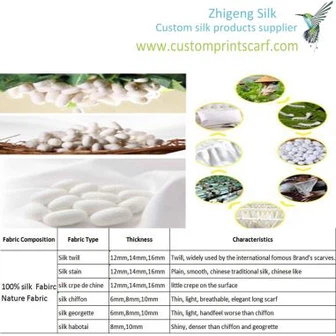
Not all "silk scarves" are created equal. Quality starts with the base fabric. Buyers usually choose from several silk weaves, each suited to different uses:
Silk Twill
Heavier and durable, with a subtle diagonal rib texture. The industry standard for luxury scarves. Ideal for scarves that need to hold their shape and drape well.
Silk Satin (Charmeuse)
Smooth and soft to the touch, with a glossy finish. Popular with customers who like shiny, smooth fabric.
Silk Habotai
Lightweight, smooth, and glossy on one side. A cost-effective option for scarves with a softer drape.
Silk Chiffon
Sheer and airy. Popular for wraps and layered fashion looks rather than structured square scarves.
For 100% mulberry silk, we regularly keep more than 10 types of silk fabric in stock. In addition to the typical fabrics listed above, we also offer silk georgette, silk paj, silk crepe de chine, silk crinkled georgette, and more. Each fabric comes in a range of weights and thicknesses, so we can meet the needs of almost any scarf project.

• 100% Modal and Modal Blends – Modal has beautiful drape, breathability, and comfort. When modal is blended with silk , you get the luster of silk and the drape of modal. When modal is woven with cashmere, the drape also has cashmere's delicate softness. Well suited to autumn/winter collection.
• 100% Wool and Wool Blends – Combine silk's sheen with the warmth and texture of wool or cashmere. With today's popular double-sided digital printing technology, these are essential fashion accessories for autumn/winter.
• 100% Cotton and Cotton Blends – Cotton is soft, breathable, and moisture-absorbing, making it very comfortable for scarves. It is also durable, easy to care for, and price-competitive. A silk and cotton blend combines the luster of silk with the softness, moisture absorption, and breathability of cotton. This makes cotton and silk-cotton blends a practical and affordable choice for larger pieces such as oversize shawls, wraps, and sarongs.
A reliable manufacturer should be able to provide fabric weight (measured in momme, usually 12–16 momme for scarves) and swatches before production begins. If a supplier cannot explain the momme weight or weave type of their base fabric, that is a red flag.

Printing Methods: Screen Printing vs. Digital Printing
This is the single biggest factor affecting cost, color accuracy, and minimum order quantity (MOQ) - and it's where many first-time buyers get confused.
Screen Printing
Screen printing, also called flatbed screen printing, works by using a separate mesh screen for each color. The areas without the design are blocked, and the open areas let ink pass through. The fabric is laid flat on a printing table. A squeegee presses ink through the screen onto the fabric. Each color is printed one by one and aligned to create the final design.
Each color in the design requires a separate screen, so costs rise with design complexity.
Produces rich, saturated colors with excellent colorfastness, especially favored for bold, graphic patterns.
Typically requires higher MOQs because screens are labor-intensive to prepare.
Best for large production runs with a limited color palette (under 10–12 colors).
Digital Printing
Digital printing works like an inkjet printer. The design file is sent directly to the printer, and printheads jet tiny ink droplets onto the fabric. No screens are needed. Today, the most common digital printing methods are single-sided digital printing and double-sided digital printing. Single-sided printing prints the design on one side, while double-sided printing prints on both sides so the scarf looks finished from either side.
Prints directly onto fabric using inkjet technology, supporting unlimited colors and photographic detail without extra setup cost per color.
Allows smaller MOQs and faster turnaround, ideal for sampling, small-batch collections, or gradient designs.
Slightly less vivid on certain color ranges compared to screen printing, though modern digital printing has closed much of this gap.
A good supplier will recommend the printing method based on your design - not push you toward whichever method is more profitable for them. If your design has photographic gradients or more than 15 colors, digital printing is almost always the better (and often only viable) choice.

Color Matching: The Make-or-Break Step
Brand consistency depends on accurate color reproduction, and this is one of the most common sources of disputes between buyers and factories. Look for suppliers who:
• Use Pantone (PMS) matching and can provide a lab dip or printed swatch for approval before bulk production.
• Disclose their color matching accuracy rate - reputable factories typically aim for 90%+ Pantone accuracy, acknowledging that slight variation is inherent to fabric dyeing versus digital/print references.
• Use eco-friendly, low-impact dyes, increasingly required by brands selling into EU and US markets.
Always request a physical strike-off sample (a small printed swatch of your actual artwork) before committing to full production. Approving from a digital mockup alone is a common - and expensive - mistake.
Edge Finishing and Construction Details
The finishing touches determine whether a scarf feels premium or cheap:
Hand-Rolled Hem
Edges are rolled and hand-stitched, a hallmark of high-end silk scarves. Labor-intensive and typically reserved for premium product lines.
Machine Rolled Hem
A more cost-efficient rolled edge, still clean and durable, suitable for mid-tier and volume orders.
Fringe or Tassel Edges
Popular for boho or shawl-style scarves, adding texture but requiring careful quality control to prevent fraying beyond the intended fringe.
When submitting artwork, buyers should also account for seam allowance - factories generally recommend leaving roughly 1.5cm around the printed panel so the design isn't cut off during hemming. Confirm this with your supplier before finalizing print files, or ask their design team to add it for you.

Minimum Order Quantities and Sampling
MOQs vary significantly by production method:
• Digital printing typically allows lower MOQs (sometimes as low as a single design run of 10 meters of fabric), making it accessible for startups or small capsule collections.
• Screen printing usually requires larger volume commitments to offset setup costs.
• Most reputable factories offer a smaller sampling option - often around 1 meter - so buyers can evaluate quality and color accuracy before committing to a full production run.
If a supplier refuses to offer any sampling option before bulk production, treat that as a significant risk.
Questions to Ask Before Choosing a Supplier
When evaluating manufacturers for a B2B custom scarf order, procurement teams should ask:
Final Thoughts
Custom silk scarves sit at the intersection of textile engineering and brand storytelling - the fabric choice, printing method, and finishing all shape both the cost and the perceived quality of the final product. Buyers who understand these fundamentals are far better positioned to brief suppliers clearly, catch quality issues early, and negotiate pricing that reflects the actual production complexity involved, rather than relying on a factory's word alone.
This guide is intended for brand owners, procurement managers, and promotional product distributors evaluating custom silk scarf manufacturing partners.
Ready to develop your custom silk collection?
Low MOQ, one-on-one custom service, free color matching and door-to-door shipping guidance - from a single sample meter to full bulk production.
Hangzhou Zhigeng Silk Co., Ltd.
Custom print silk scarf · silk tie · silk sleepwear · pillowcase · linen tea towel